 I belong to an online synagogue. Someone posed a question to all of us to write in five words or less what we’re looking forward to this week. I wrote “Making sense of all this” which leads me to attempt to write this piece that you are now reading.
How do we “make sense of all this?” Do we look at the angst of being locked down to avoid causing others’ or our own deaths? Do we look at the new opportunities we have for re-orienting ourselves and take it as a transformative moment? Do we try to derive some meaning from the situation? Do we learn to bake sourdough bread? Are there answers as varied as there are people? Honestly, all I can do is speak from my own vantagepoint.
Savoring the special moments
I find that my answers vary from moment to moment. The intensity of our restrictions has led me to savor the special moments more than I have done in the past.
I love having more time with my husband. We’ve been together for 52 years and slowing down my busyness outside of the house has been a gift for our relationship. Also, having combined households after quarantining I have the special moments with my almost six-year-old grandson, drawing together, doing theatre exercises, watching the Marx Brothers doing the mirror sketch and trying it out ourselves, just hearing his take on the world right now, his sweet voice (when he’s not being a dinosaur). I love the brief moments of holding my 3-week-old granddaughter, watching her fleeting smiles and hearing her sweet sounds. Our joint family Shabbat dinner Friday night has a new intensity and meaningfulness, especially after our months of having to be apart.
Hiking, while masked, of course, to the top of Mt. Davidson each day reminds me that in spite of all this angst, there is the beauty of nature – the trees blowing in the wind, the birds singing, the view of San Francisco from the top of the mountain, the fresh air, sometimes misty and sometimes clear.
 Yes, I am baking sourdough country loaves and English Muffins and challah. I don’t think it’s an accident that so many of us are baking bread right now. Whether your yeast is store-bought or created, yeast grows – it’s alive, it’s kneaded and needed, and it helps to create a beautiful, delicious food that feeds the body and the soul.
Becoming more conscious of social justice issues

The seriousness of our situation across the entire planet seems to have opened our hearts more. I don’t think it’s an accident that white people are finally on board with the Black Lives Matter movement. Our avoidance because of discomfort is not an option and we are finally aware of this. Society will change because of this pandemic!
Learning to pay attention to science
We are being made even more aware of the contribution of scientists to our well-being. Maybe more people will take global warming seriously after realizing that our lives depend upon the skills being applied worldwide by epidemiologists and virology experts.
Contemplation

This lockdown has encouraged me to meditate more and to be more contemplative. Yesterday I read the recently published in English book, Yes to Life in Spite of Everything. Viktor Frankl helps me to make sense of everything. In the prologue, Daniel Goleman reflects upon Frankl’s perspective about how we find meaning no matter what our circumstance. Here he is talking about life in a concentration camp, surely a more angst-ridden condition than what we are experiencing, yet . . . (bold, italics mine)
“Despite the cruelty visited on prisoners by the guards, the beatings, torture, and constant threat of death, there was one part of their lives that remained free: their own minds. The hopes, imagination, and dreams of prisoners were up to them, despite their awful circumstances. This inner ability was real human freedom; people are prepared to starve, he saw, ‘if starvation has a purpose or meaning.’ The lesson Frankl drew from this existential fact: our perspective on life’s events—what we make of them—matters as much or more than what actually befalls us.
– Frankl, Viktor E.. Yes to Life (p. 17). Beacon Press. Kindle Edition.
How do you make sense of this? I’d love to hear your perspective.
 Tomorrow I get to experience two learning experiences. First, the middle way in science, starting with a reading by Richard Feynman about the uncertainty of science. Then comes the first day of Talmud study, Daf Yomi, a 7.5 year one page per day excursion into the Talmud. What do these seemingly opposite fields of study have in common? Way more than you would think! Here are a few bullet points that both have in common:
 What is different about these endeavors? The obvious answer is that one seeks to understand nature. The other seeks to understand what humans should do. There is no instruction in science about what the effects may be of science. Think about the nuclear bomb, for example. This is the obvious answer, and there is much truth to this, but maybe we should ask ourselves what the effects of Talmud discourse have been on women, for example. The men who wrote the Talmud clearly did not know that the role of women would be quite different in modern times than it was when they were writing. Some would say that Talmudic discourse might have been used to keep women in their place. So the effects of both science and Talmud are not always predictable.
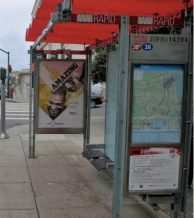 I saw the bus stand, a place with four individual seats for those who wanted to sit while waiting for the bus. This was rush hour. The seats are usually filled by the time I get there, but today there were three vacant seats. I soon learned why. The person sitting in the far left seat was loudly shrieking every 10 seconds or so. I sat in the right-most seat. My ears could take it, and I hate standing to wait for the bus. I started thinking about what would happen if I talked to the person who was shrieking. Would I help him to temporarily break the spell of his madness? I didn’t ponder the question for a long time because a young woman stepped up with her 3-year-old son. She sat him near to the fellow who was shrieking, with only one seat between them. Soon, they are making cute little noises at each other. First, the child, and then the man made a soft sound, back and forth, repeatedly. These two, the noisy man and the 3-year-old were basically cooing at each other, and smiling. The spell was broken, at least temporarily. I had my answer.
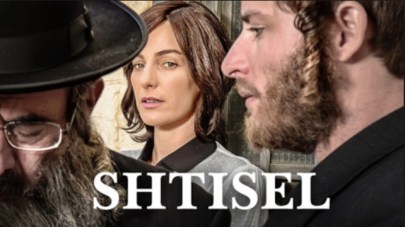


 I have been religiously listening to

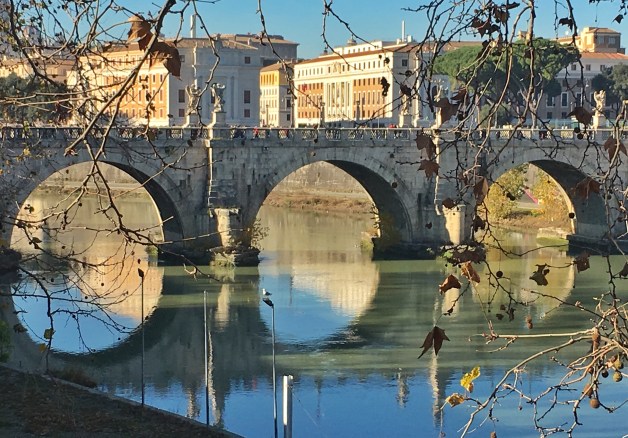 Can ordinary life be like a vacation? What do we do differently that makes a vacation enjoyable and a return to home less than wonderful? I’ve been thinking about this because we just came home from living in Rome for most of December. The return has been difficult, not just because of jet lag and a bad cold, but because my consciousness has switched to home mode when it could very well be in Rome mode. How, you may ask?
 Second, I always noticed the beauty all around me, from the sky to the old ruins and colorful buildings; the old churches, a few with their Caravaggios or spectacular mosaics; the piazzas, the restaurants, the pizza places; the fountains, the trees, the birds, the people – everything. I was alert and saw what was around me. I wasn’t in my head thinking about what I needed to do next.

 The renowned Zen practitioner and teacher Charlotte Joko Beck quotes the priest Anthony Demillo, who said that we should view all people as mean, vicious, untrustworthy, and manipulative. And innocent. And blameless.
 I am as distraught as I’m sure you are about the times in which we find ourselves. There are violent white supremacists marching in the streets; violent antifa activists who think they can take care of the situation; and most of us, who show up to say that we will act in a peaceful manner and make ourselves heard. We will stand against Islamaphobia, racism, and anti-Semitism. But is standing up and being seen enough? I think the answer to that question is no. Here is why.
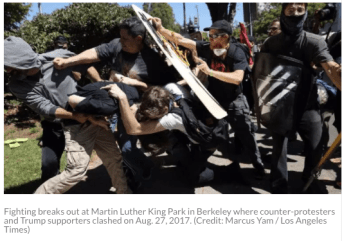 enter in San Francisco and were not harassed. They were just there – no issue at all. The situation in Berkeley was completely different. The antifa people, who, apparently, love a good fight, may have helped radicalize people to a more extreme position than they originally held.
 white supremacists. There are organizations like
 Rabbi Susan Averbach