Israel/Palestine

As an adult I’ve spent the last 56 years or so being quite ambivalent about the state of Israel, though I know in my gut why people thought that they could solve the problem of Jewish survival by creating this state. 

A little personal history: My grandfather came to Palestine from Poland with his family in 1903. They settled in Petah Tikvah. My grandmother left Poland and arrived there around 1906. They met and married in 1911. My grandfather, Sol, wanted to move to America, but my grandmother refused. “I will not change one gentile nation for another gentile nation,” she was quoted as saying. My grandfather had a different opinion. I may have invented a reason that he wanted to leave Palestine, but the narrative I imagine is that he, fluent in Arabic, was happy with the coexistence of those early days of Petah Tikvah. The Labor Zionists who were becoming more active, wanted to only hire Jewish labor. Whether this was the reason or not, he chose to move to America and tricked my grandmother into leaving. She thought the trip to Chicago was to visit relatives, but Sol had no intention of returning to live in Palestine. Sol and Minnie lived in Chicago and had six children. One year after Sol’s death, in 1969 Minnie, age 77, moved back to Petah Tikvah, a place where she wanted to live the rest of her life and she succeeded in doing so. 

Why do I write the above narrative? Their story shapes my own attitude about Israel. I’m aware that my grandmother’s family, who stayed in Poland, perished. My grandmother lived because she went to Palestine! My, possibly imagined, narrative about my grandfather, his ability to coexist with Arab neighbors and the later undermining of that coexistence fuels my identification with the perspective that the exclusionary path was a dead end. It surely seems to have resulted in war after war.

What happens in Israel affects Jews everywhere, and, of course, affects Palestinians, too! Ever since October 7th, 2023, when Hamas brutally murdered and kidnapped Israelis and this vicious war began, I’ve been forced to face my attitude about Israel. I’ve been appalled by the black and white divisions among people I know – totally backing Palestine – totally backing Israel. Early on, there were demonstrations that included Israelis, Palestinians, and local Jews who were demanding a cease fire and return of the hostages. My husband and I went to these demonstrations but there were very few people there. People want to side with one side or the other. 

Now is the time for more nuance. After demonstrating last Monday with about 30 rabbis with various attitudes toward Israel, blocking traffic in front of the Israeli Embassy, demanding an end to the war and humane treatment of Gazans and Palestinians in the West Bank, I had to ponder whether or not I would join the Israeli ex-pats and other local Jews at a demonstration in solidarity with Israelis in Israel and across the United States demanding an end to the war, surge of food for Gazans, and return of the remaining hostages. I knew there would be Israeli flags everywhere at this demonstration. I decided that if I were to go to this demonstration I’d have to design and display my own flag. Decide for yourself what this flag means – there can be multiple meanings. Let’s ponder a way forward and listen to Yehuda Bauer’s words: 

“Thou shalt not be a victim, thou shalt not be a perpetrator, but, above all, thou shalt not be a bystander.”

Learn about Humanistic Judaism

Whenever a humanistic rabbi officiates a wedding or baby naming or funeral, afterwards people show great enthusiasm. Finally, they have witnessed a ceremony where words are said that don’t conflict with their beliefs. They ask “Where have you been?” These life cycle events embody the beliefs of the secular humanistic Jewish movement; being in community, celebrating Jewish connection inclusively, and maintaining our intellectual and spiritual integrity by honestly saying what we believe. 

And now, we are so fortunate to have a book, compiled by Rabbi Adam Chalom and Rabbi Jodi Kornfeld, that describes the beliefs, ethics, history, identity, and culture of the secular humanistic Jewish movement. In this book various humanist rabbis and other leaders of this movement and other writers have contributed to rich discussions that include Judaism without God, God as a literary figure, positive humanism as a guiding principle, Jewish identity, Jewish art, music, and literature, liturgy, life cycle, and education. 

Anyone who has an open mind and is interested in exploring a form of Judaism that is in sync with their humanist beliefs will be overjoyed when they read this book. Or maybe you are Reform, or Conservative, or Orthodox. You, too will benefit, knowing that the Jewish community as a whole includes secular humanistic Jews. We are all family and will all benefit from reading this rich and engaging book. 

link to order book

Anxiety Growth

When we think about anxiety, we think about tempering it, getting rid of it, pushing it away. It hurts. It hurts our bodies, our minds, our general sense of wellbeing. But what if this awful feeling teaches us something or, even more radical, makes us a more loving, connected person?

These are thoughts that have been running through my mind during several days of high anxiety. Often I use meditation apps for relaxing, especially for getting to sleep. A yoga nidra guide, in particular, often asks for an intention. Mine is always to love more. Just thinking that intention and meditating on it doesn’t really change anything, in my opinion. It becomes just a thought and does not grow into real action. 

Anxiety, on the other hand, breaks my heart open. Suddenly I can feel the pain of others and have better understanding about how people react to such pain. For example. . . .stay steady here . . . .I had an insight into why people like Trump. When you are in the middle of high anxiety, whether the reasons are bogus or not, you want relief. You want someone who names this irrational anxiety and says they are going to fix it. People who are afraid want someone to fix their reality, even if that reality is not in sync with Reality! Might we be able to communicate with these people with this understanding? Or at least not feel strong animosity towards them?

Another use of anxiety is to explore ways to cope and then share these insights with others. I can usually find something on my phone to listen to – Charlotte Joko Beck, Thich Nhat Han, Gabrielle Bernstein, Ram Dass, and so many others. Then, when I find a way to calm myself, I know that what I find may comfort others as well. 

Grow from your anxiety! It’s possible!

High Anxiety

I’m trying to find the value in living for a day or two with anxiety. Here are the three that come to mind.

1. I’ll know how other people who have chronic anxiety feel.

2. The anxiety will motivate me to take care of what is making me anxious.

3. This is a learning opportunity for easing the anxious feelings with techniques that may be shared with others. 

Why am I anxious? My PayPal account was hacked and someone took my money. The bank is on it and PayPal is doing a terrible job of helping me. Once this is taken care of, I’ll close the PayPal account – a good use of my anxiety, wouldn’t you say? 

Other thoughts: The world is a mess. If we only include Israel, Gaza, and the United States, truly one has the fuel for high anxiety! I find it interesting that, for the moment, I was more anxious about my own financial crisis – which, in the grand scheme of things, is less important than what is happening in the world right now! 

So, what shall we do. Let’s learn to stay as calm as possible and start writing postcards for the coming elections. Let’s support organizations who are working tirelessly for peace between Israeli Jews and Palestinians. And, of course, keep a close eye on your PayPal account!

Civil Discourse – from Jewish Tradition to Modern Street Epistemology

Below is a short introduction to a portion of a panel discussion by the International Institute for Secular Humanistic Judaism (IISHJ). The title of the panel was Arguing Jewishly. I chose to talk briefly about the Jewish tradition of civil discourse and a way of having discussions based on Street Epistemology. I cannot think of a better time for us to dive into learning to have civil discussions.

From your left to right: Rabbi Denise Handlarski, Rabbi Susan Averbach, and Rabbi Jodi Kornfeld

Hello, welcome. Since our topic is about creating a civil way to have discussions based upon our Jewish tradition, let’s start with an uncivil discussion – one we are likely familiar with if we spend any time on social media.

Jess: You can’t live a moral life without God

Allie: That’s ridiculous. There are plenty of atheists who are morally responsible!

Jess: Nope – scratch the surface and you’ll see that they were raised by God fearers.

Allie: that’s not true – we are third generation socialists!

Jess: Ahhh, so you’re not really moral at all. You think capitalists are scum. You believe in revolution. You have no moral compass.

Allie: That’s absurd. We care more than you do!

Jess: You’re ridiculous – look at history – Stalin!

Allie: Stalin wasn’t a socialist!

Jess: oh, yeah!

Allie: Yeah! Look at the crimes committed by God infused true believers – the Twin Towers!

Jess: That’s not what I’m talking about.

Allie: God is God – you don’t know what you’re talking about. What idiocy!

and so on and so on….

So might go a modern uncivil argument. Before my 8 minutes are over, we’ll look at an alternative form of this argument.

We already have a model for civil discourse in the Jewish tradition.

The Sages; that is, the voices heard in Mishna and Talmud, our post-biblical, rabbinic literature, made a distinction between arguing for the sake of heaven. [Makhlokhet L’Shem Shemayim] or arguing like Korach. For the sake of heaven – read as for the benefit of all or for the greater good. Korach, they argue, who rebelled against Moses and was swallowed up for his rebellion, argued for the sake of his own ego. 

The sages weren’t always civil. Their civility evolved from the violent expression of disagreements between the house of Shammai and the house of Hillel. There is a story in which the students of Hillel are slaughtered by the House of Shammai, but the latest redactors of the Talmud, made sure to edit and add to stories to require respect of all parties in an argument.

I read a page of Talmud a day and recently came upon a passage where one Sage called another a fool and I could feel the difference from all other passages I had been reading over the course of the past few years. Then – boom – a line later the beam of the study house falls over and the walls start to come down – all due to the lack of respect between these two scholars.

You can find clear messages in Talmud regarding how to treat each other during arguments. Here are a couple examples.

Anyone who humiliates another in public, it is as though he were spilling blood.

Bava Metzia 58b

It is more comfortable for a person to cast himself into a fiery furnace, than to humiliate another in public 

Bava Metzia 59a

So what do arguments have in common in the rabbinic tradition; what is argument for the sake of heaven – read – for the benefit of all – for the greater good?:

1. Debate the issues without attacking people and harming relationships.

2. Check your motivation: are you trying to win an argument or solve a problem?

3. Listen to the other side and be open to admitting that you might be wrong.

4. Consider that you both may be right, despite holding opposite positions.

What rules did our friends Jess and Allie break.

1. they attacked each other

2. they just want to win their argument

3. they were not listening to each other and neither want to admit they may be wrong

4. are they both right – maybe, maybe not – that’s okay

Here is how the conversation might have gone. I’m basing this new conversation on a method called street epistemology. Ask me about that later. Their method fits well with the requirement that we respect each other when we have discussions. They even go a step farther and encourage a person who makes a claim to think through their own process of thought that brought them to make a claim in the first place and even possibly change their own mind.

Jess and Allie – take 2

Jess: You can’t live a moral life without God

Allie: Interesting, you think that a person cannot do the right thing if they don’t believe in God?

Jess: Yes, that’s what I’m saying.

Allie: Interesting. On a scale of 1 to 10, where 10 is your absolute certainty, what number would you rank your claim?

Jess: Hmmm, I’d probably give it an 8.

Allie: An 8, why not a 10?

Jess: Well, I have known some pretty kind and righteous people who don’t believe in God and I also know some folks who seem to be quite religious, but are selfish and mean-spirited. Hmmm…..

Allie: Any other thoughts that come to mind about that?

Jess: I’ll think about this. Thank you.

What is the change in orientation shown by this second way of having this argument? First, it’s not really an argument – it’s a mutual exploration of a claim, with two people who show respect to each other and who are looking for the truth – as unreachable as it may be. It’s a start. 

To have this sort of discussion requires what I’m terming the three c’s.

Composure – not being reactive

Compassion – caring about the person you are talking with.

and Curiosity – genuine curiosity – if you respect someone, be curious about what process led them to their claim.

Yehuda Amichai intuitively favored this approach in his poem, 

The Place Where We Are Right. I’d like to end with this powerful poem.


        by Yehuda Amichai
 
From the place where we are right
Flowers will never grow
In the spring.
 
The place where we are right
Is hard and trampled
Like a yard.
 
But doubts and loves
Dig up the world
Like a mole, a plow.
And a whisper will be heard in the place
Where the ruined
House once stood.

Thank you.

Postscript: This talk was given at the International Institute for Secular Humanistic Judaism. https://iishj.org

The broad movement that this institute serves is The Society for Humanistic Judaism. https://shj.org

Street Epistemology is taught online and you can find many YouTube examples. If you would like free training in street epistemology go to: https://streetepistemology.com

A group of members of The Middle Way Society, including myself, are studying and practicing street epistemology. Check us out. https://www.middlewaysociety.org

Civil Discourse – from Jewish Tradition to Modern Street Epistemology

Below is a short introduction to a portion of a panel discussion sponsored by the International Institute for Humanistic Judaism (IISHJ). The title of the panel was Arguing Jewishly. I chose to talk briefly about the Jewish tradition of civil discourse and a way of having discussions called Street Epistemology. I cannot think of a better time for us to dive into learning to have civil discussions!

Hello, welcome. Since our topic is about creating a civil way to have discussions based upon our Jewish tradition, let’s start with an uncivil discussion – one we are likely familiar with if we spend any time on social media.

Jess: You can’t live a moral life without God

Allie: That’s ridiculous. There are plenty of atheists who are morally responsible!

Jess: Nope – scratch the surface and you’ll see that they were raised by God fearers.

Allie: that’s not true – we are third generation socialists!

Jess: Ahhh, so you’re not really moral at all. You think capitalists are scum. You believe in revolution. You have no moral compass.

Allie: That’s absurd. We care more than you do!

Jess: You’re ridiculous – look at history – Stalin!

Allie: Stalin wasn’t a socialist!

Jess: oh, yeah!

Allie: Yeah! Look at the crimes committed by God infused true believers – the Twin Towers!

Jess: That’s not what I’m talking about.

Allie: God is God – you don’t know what you’re talking about. What idiocy!

and so on and so on….

So might go a modern uncivil argument. Before my 8 minutes are over, we’ll look at an alternative form of this argument.

We already have a model for civil discourse in the Jewish tradition.

The Sages; that is, the voices heard in Mishna and Talmud, our post-biblical, rabbinic literature, made a distinction between arguing for the sake of heaven. [Makhlokhet L’Shem Shemayim] or arguing like Korach. For the sake of heaven – read as for the benefit of all or for the greater good. Korach, they argue, who rebelled against Moses and was swallowed up for his rebellion, argued for the sake of his own ego. 

The sages weren’t always civil. Their civility evolved from the violent expression of disagreements between the house of Shammai and the house of Hillel. There is a story in which the students of Hillel are slaughtered by the House of Shammai, but the latest redactors of the Talmud, made sure to edit and add to stories to require respect of all parties in an argument.

I read a page of Talmud a day and recently came upon a passage where one Sage called another a fool and I could feel the difference from all other passages I had been reading over the course of the past few years. Then – boom – a line later the beam of the study house falls over and the walls start to come down – all due to the lack of respect between these two scholars.

You can find clear messages in Talmud regarding how to treat each other during arguments. Here are a couple examples.

Anyone who humiliates another in public, it is as though he were spilling blood.

Bava Metzia 58b

It is more comfortable for a person to cast himself into a fiery furnace, than to humiliate another in public 

Bava Metzia 59a

So what do arguments have in common in the rabbinic tradition; what is argument for the sake of heaven – read – for the benefit of all – for the greater good?:

1. Debate the issues without attacking people and harming relationships.

2. Check your motivation: are you trying to win an argument or solve a problem?

3. Listen to the other side and be open to admitting that you might be wrong.

4. Consider that you both may be right, despite holding opposite positions.

What rules did our friends Jess and Allie break.

1. they attacked each other

2. they just want to win their argument

3. they were not listening to each other and neither want to admit they may be wrong

4. are they both right – maybe, maybe not – that’s okay

Here is how the conversation might have gone. I’m basing this new conversation on a method called street epistemology. Ask me about that later. Their method fits well with the requirement that we respect each other when we have discussions. They even go a step farther and encourage a person who makes a claim to think through their own process of thought that brought them to make a claim in the first place and even possibly change their own mind.

Jess and Allie – take 2

Jess: You can’t live a moral life without God

Allie: Interesting, you think that a person cannot do the right thing if they don’t believe in God?

Jess: Yes, that’s what I’m saying.

Allie: Interesting. On a scale of 1 to 10, where 10 is your absolute certainty, what number would you rank your claim?

Jess: Hmmm, I’d probably give it an 8.

Allie: An 8, why not a 10?

Jess: Well, I have known some pretty kind and righteous people who don’t believe in God and I also know some folks who seem to be quite religious, but are selfish and mean-spirited. Hmmm…..

Allie: Any other thoughts that come to mind about that?

Jess: I’ll think about this. Thank you.

What is the change in orientation shown by this second way of having this argument? First, it’s not really an argument – it’s a mutual exploration of a claim, with two people who show respect to each other and who are looking for the truth – as unreachable as it may be. It’s a start. 

To have this sort of discussion requires what I’m terming the three c’s.

Composure – Compassion – and Curiosity

Composure – not being reactive

Compassion – caring about the person you are talking with.

and Curiosity – genuine curiosity – if you respect someone, be curious about what process led them to their claim.

Yehuda Amichai intuitively favored this approach in his poem, 

The Place Where We Are Right. I’d like to end with this powerful poem.


        by Yehuda Amichai
 
From the place where we are right
Flowers will never grow
In the spring.
 
The place where we are right
Is hard and trampled
Like a yard.
 
But doubts and loves
Dig up the world
Like a mole, a plow.
And a whisper will be heard in the place
Where the ruined
House once stood.

Thank you.

If you would like to view the whole panel discussion, here is the link:

If you would like to take a free training class in Street Epistemology, here is the link.

https://streetepistemology.com/

Another important organization that encourages civil discourse is The Middle Way Society.

Turning suffering into compassion

Woke up. Got ready for a long walk. Placed a key in my pants pocket. Looked for my wallet. Where’s my wallet? Not where I usually keep it. Not anywhere to be found. I walk and meditate with a friend on Mondays and it was time to leave and walk up to Mt. Davidson. I had time to think about how I was feeling – trying to keep the panic down. I’m getting ready to travel and need my credit card, driver’s license, and medical card. The fear of not being able to replace these in the next three days is manifesting in real physical symptoms. My heart is racing. My stomach feels tense. I feel that hand tingling sensation that comes with anxiety.

I don’t cancel my walk. We walk and talk over Skype. My walking partner is in the UK. She tells me her news. I raptly listen. I tell her my news. Then we commence our 30 minute walking meditation. Ordinarily my walking meditation includes just sensing, feeling, and being. If I find myself thinking I just take a big breath and think the words: “sensing, feeling, being,” but today, there was just thinking, thinking, and more thinking. What if I can’t find my wallet? What an idiot I am to feel this bad about a mere wallet. What sort of person am I? Maybe I could use this sensation to have more empathy for others who are suffering, for whatever reason. If I feel this bad about a wallet, how do people feel when they are given a grave medical diagnosis? when they have a panic disorder? when they are grieving? unsure? scared? Use this time. Use this sensation to understand others’ suffering. Remember how you are feeling. Don’t forget.

I returned home, emptying drawers from my dresser, looking in my suitcase, going over and over the same areas of our two room living space. I go through a travel bag for the fourth time and find a zipper that I forgot to unzip, and voila! There was my wallet. What a relief. And what a lesson!

Sentient Being? Human? Jew? Shabbat Keeper?

This blog series is called “Musings of an Agnostic Rabbi.” Lately I’ve been musing about what it means to be a Jew these days. I know – that is a ridiculous question. Perhaps the question should be “what does it mean for me to be a Jew at this point in my life?” I find inspiration in many places, including Zen Buddhism, Mindfulness Meditation, Sufism (mainly poetry by Rumi), Secular Humanistic Judaism, the Middle Way Society, and Christianity. I just re-read Gilead by Marilynn Robinson and I still think this novel is profound, and thoroughly Christian.

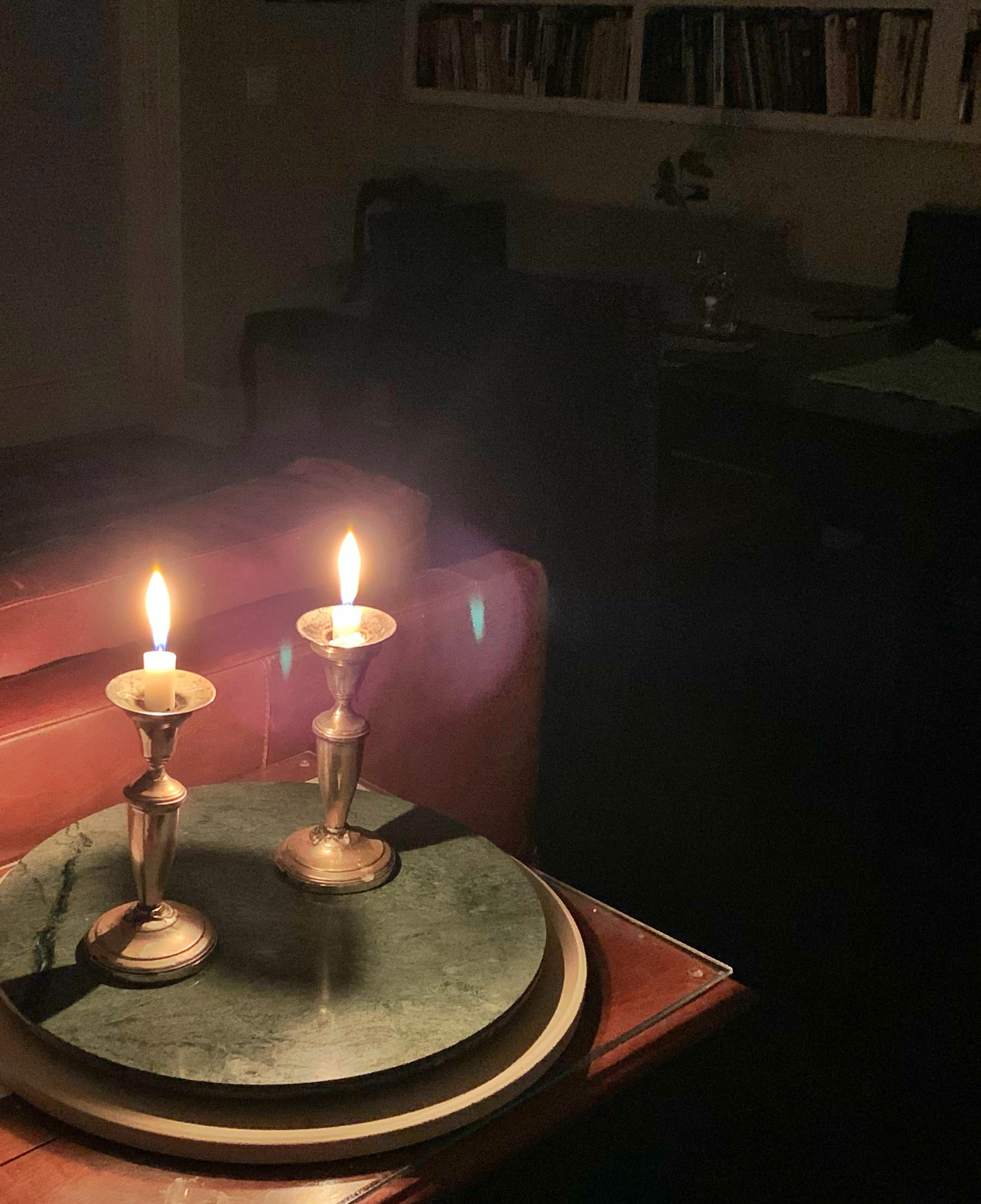
There are several activities that keep me in the world of Jewish. We have a family Shabbat meal together every Friday night. We sing and light candles. I disconnect from media on Saturday and mainly read and walk and spend quality time with my husband. I’m a member of an online community called secularsynagogue.com and am especially inspired by those within the group who are Jews by choice.  I’m in a Torah study group with people with all sorts of points of view. I read a page of Talmud a day along with over 9000 other people. A page is called a daf and the practice is called Daf Yomi. We write our comments on Facebook. Much of what we read is irrelevant to my life. For example, lately we’ve been reading page after page about how long to sequester the priest before he goes into the Holy of Holies within the Temple on Yom Kippur. This Temple has not existed since 70 C.E.! Yesterday, someone asked about why God wants us to do what is being described in these dafs. From my own perspective, this was a strange question. Maybe the question should be “why do the sages think we should do this?” I find the discussion to be interesting historically and if I find any inspiration at all, it’s in the sages’ patience with argumentation and recognition that a final decision about whatever is being discussed is often not attainable. There are just too many variables to consider, though they consider quite a few! Maybe, to be a Jew is to be comfortable with not knowing.  Maybe, to be a Jew is to accept a middle way perspective, modeled even by our ancient sages!

Recently I re-read Irwin Kula’s book, Yearnings: Embracing the Sacred Messiness of Life. In the chapter on creativity he talked about the Israelites inability to see forward when they were in the desert after leaving Egypt. They looked back to their old ways and wanted a golden calf to worship as they had in Egypt. Maybe, for some of us, the ancient laws of Judaism are our golden calf. Maybe, we have to take in new ideas and embrace those old ones that still have some relevance to create a new way forward. The world is smaller than it was. We’ve been exposed to Judaism, Islam, Christianity, Hinduism, Buddhism, secular humanism, so many points of view! We have learned to think critically and respect science. Because of the pandemic, we have never been more connected to everyone in the entire world than we are now. Where will we take this connection and knowledge? What will be our way forward? Will we work to save the planet? Will we respect each others’ differences? Will we shrink and build a golden calf by clinging to old beliefs? The sages were not afraid to argue about how to go about making decisions about what to do. Maybe, at the very least, we can use their example to recognize that the struggle is worth having, and that we may embrace the sacred messiness of it all. Maybe that’s what being a Jew is for me. Ask me next week.

Heart’s hope for new year

My close friend, Laura, sent me this poem today. It was written by a man whose family suffered after the establishment of the state of Israel. In this poem, called Revenge, he humanizes his enemies. The protagonist of the poem loses his father to war, and yet . . . well, please read the poem. We, who perceive enemies across the political divide can learn from Ali:

Revenge

by Palestinian poet Taha Muhammad Ali (translated by Peter Cole, Yahya Hijazi, and Gabriel Levin)

At times … I wish
I could meet in a duel
the man who killed my father
and razed our home,
expelling me
into
a narrow country.
And if he killed me,
I’d rest at last,
and if I were ready —
I would take my revenge!

But if it came to light,
when my rival appeared,
that he had a mother
waiting for him,
or a father who’d put
his right hand over
the heart’s place in his chest
whenever his son was late
even by just a quarter-hour
for a meeting they’d set —
then I would not kill him,
even if I could.

Likewise … I
would not murder him
if it were soon made clear
that he had a brother or sisters
who loved him and constantly longed to see him.
Or if he had a wife to greet him
and children who
couldn’t bear his absence
and whom his gifts would thrill.
Or if he had
friends or companions,
neighbours he knew
or allies from prison
or a hospital room,
or classmates from his school …
asking about him
and sending him regards.

But if he turned
out to be on his own —
cut off like a branch from a tree —
without a mother or father,
with neither a brother nor sister,
wifeless, without a child,
and without kin or neighbours or friends,
colleagues or companions,
then I’d add not a thing to his pain
within that aloneness —
not the torment of death,
and not the sorrow of passing away.
Instead I’d be content
to ignore him when I passed him by
on the street — as I
convinced myself
that paying him no attention
in itself was a kind of revenge.

Nazareth
April 15, 2006

******

During the Days of Awe between Rosh Hashanah and Yom Kippur and on to the next year and beyond I dedicate myself to learn to grow and nurture a generous heart such as Taha Muhammad Ali’s. May it be so.

Making sense of all this

MTDAVIDSONI belong to an online synagogue. Someone posed a question to all of us to write in five words or less what we’re looking forward to this week. I wrote “Making sense of all this” which leads me to attempt to write this piece that you are now reading.

How do we “make sense of all this?” Do we look at the angst of being locked down to avoid causing others’ or our own deaths? Do we look at the new opportunities we have for re-orienting ourselves and take it as a transformative moment? Do we try to derive some meaning from the situation? Do we learn to bake sourdough bread? Are there answers as varied as there are people? Honestly, all I can do is speak from my own vantagepoint.

Savoring the special moments

I find that my answers vary from moment to moment. The intensity of our restrictions has led me to savor the special moments more than I have done in the past.

I love having more time with my husband. We’ve been together for 52 years and slowing down my busyness outside of the house has been a gift for our relationship. Also, having combined households after quarantining I have the special moments with my almost six-year-old grandson, drawing together, doing theatre exercises, watching the Marx Brothers doing the mirror sketch and trying it out ourselves, just hearing his take on the world right now, his sweet voice (when he’s not being a dinosaur). I love the brief moments of holding my 3-week-old granddaughter, watching her fleeting smiles and hearing her sweet sounds. Our joint family Shabbat dinner Friday night has a new intensity and meaningfulness, especially after our months of having to be apart.

Hiking, while masked, of course, to the top of Mt. Davidson each day reminds me that in spite of all this angst, there is the beauty of nature – the trees blowing in the wind, the birds singing, the view of San Francisco from the top of the mountain, the fresh air, sometimes misty and sometimes clear.

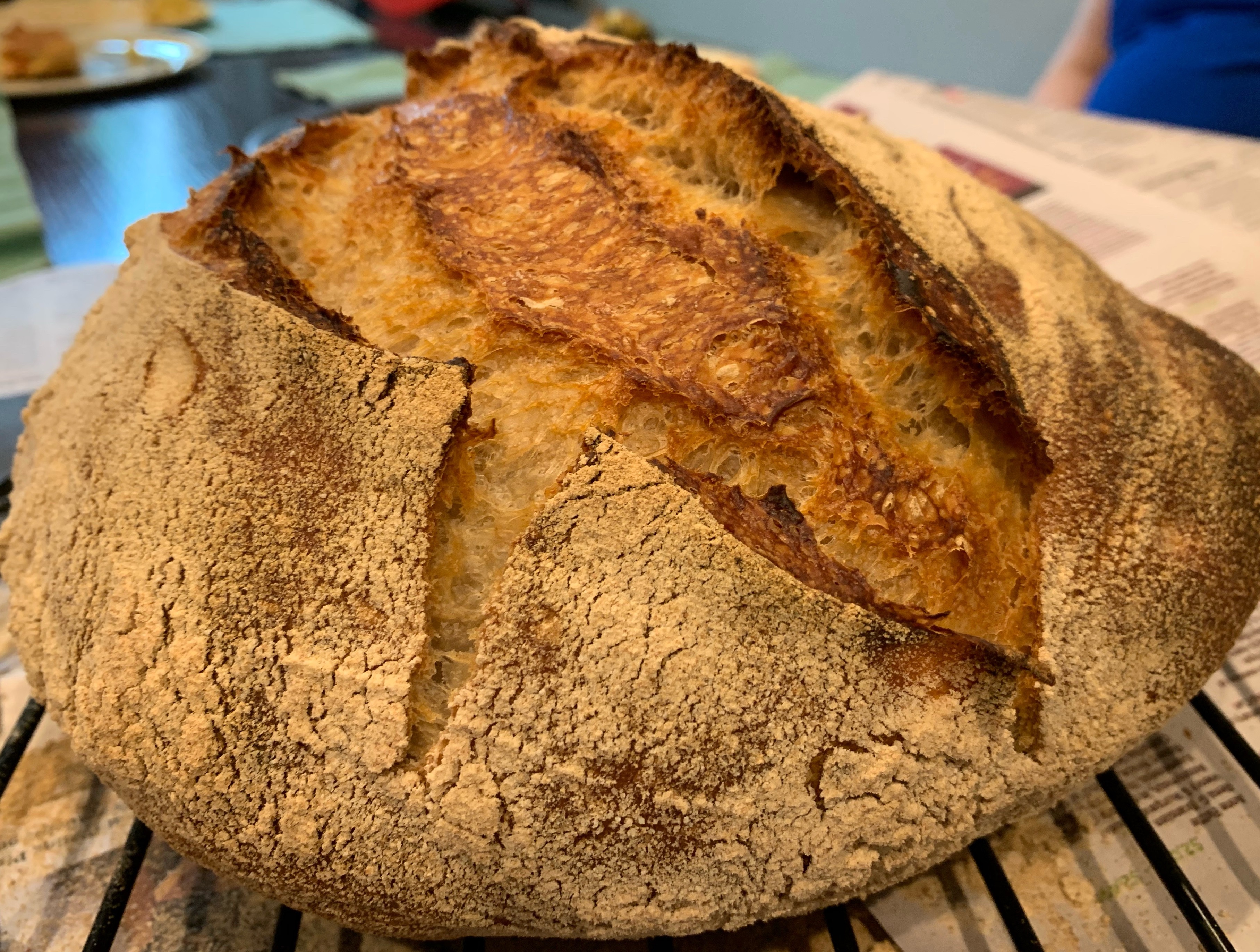
BREADYes, I am baking sourdough country loaves and English Muffins and challah. I don’t think it’s an accident that so many of us are baking bread right now. Whether your yeast is store-bought or created, yeast grows – it’s alive, it’s kneaded and needed, and it helps to create a beautiful, delicious food that feeds the body and the soul.
Becoming more conscious of social justice issues

BLM

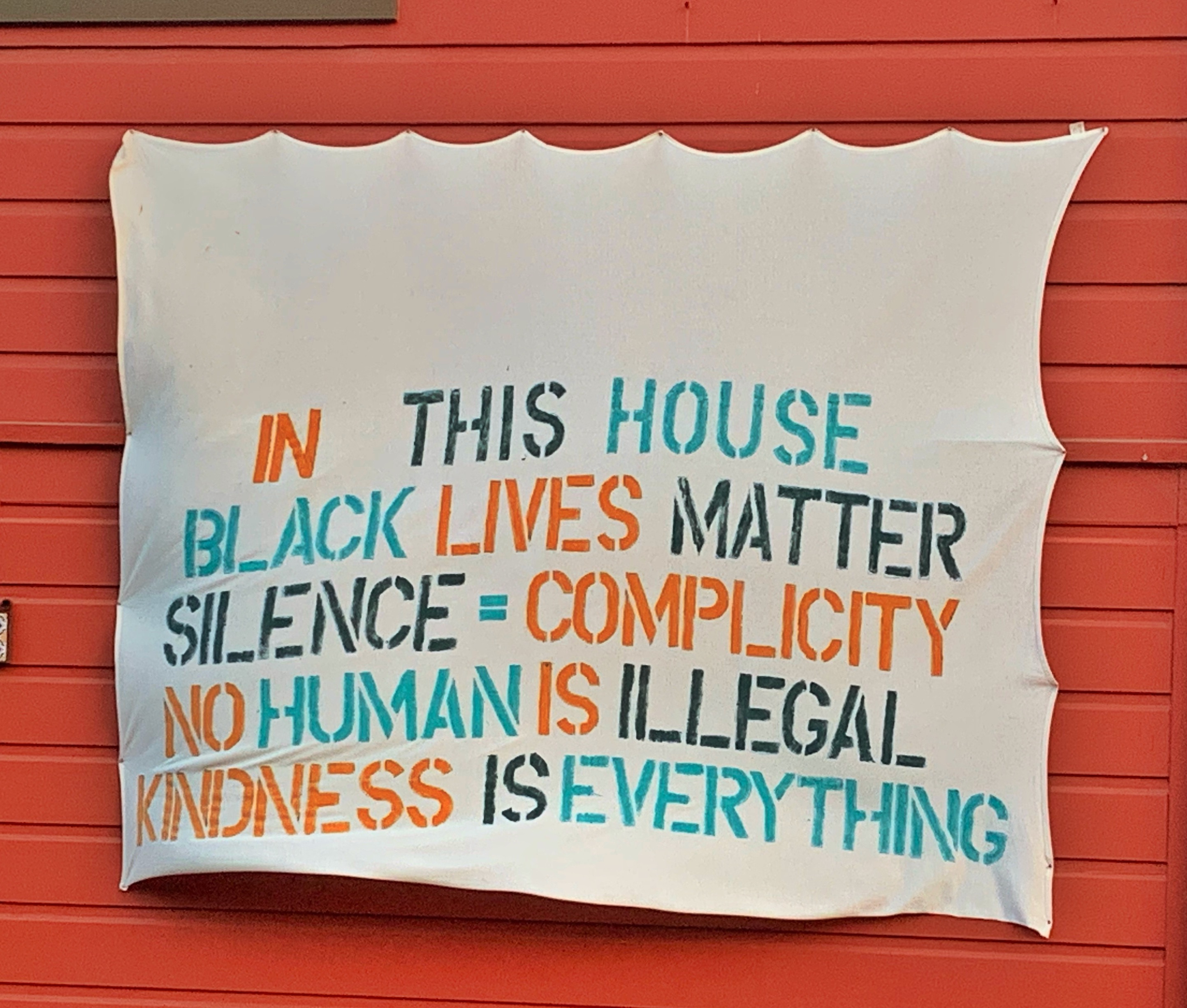
The seriousness of our situation across the entire planet seems to have opened our hearts more. I don’t think it’s an accident that white people are finally on board with the Black Lives Matter movement. Our avoidance because of discomfort is not an option and we are finally aware of this. Society will change because of this pandemic!

Learning to pay attention to science

We are being made even more aware of the contribution of scientists to our well-being. Maybe more people will take global warming seriously after realizing that our lives depend upon the skills being applied worldwide by epidemiologists and virology experts.

Contemplation

MEDITATION

This lockdown has encouraged me to meditate more and to be more contemplative. Yesterday I read the recently published in English book, Yes to Life in Spite of Everything. Viktor Frankl helps me to make sense of everything. In the prologue, Daniel Goleman reflects upon Frankl’s perspective about how we find meaning no matter what our circumstance. Here he is talking about life in a concentration camp, surely a more angst-ridden condition than what we are experiencing, yet . . . (bold, italics mine)

“Despite the cruelty visited on prisoners by the guards, the beatings, torture, and constant threat of death, there was one part of their lives that remained free: their own minds. The hopes, imagination, and dreams of prisoners were up to them, despite their awful circumstances. This inner ability was real human freedom; people are prepared to starve, he saw, ‘if starvation has a purpose or meaning.’ The lesson Frankl drew from this existential fact: our perspective on life’s events—what we make of them—matters as much or more than what actually befalls us.

– Frankl, Viktor E.. Yes to Life (p. 17). Beacon Press. Kindle Edition.

How do you make sense of this? I’d love to hear your perspective.