Smartphone Addiction – Can We Break This?

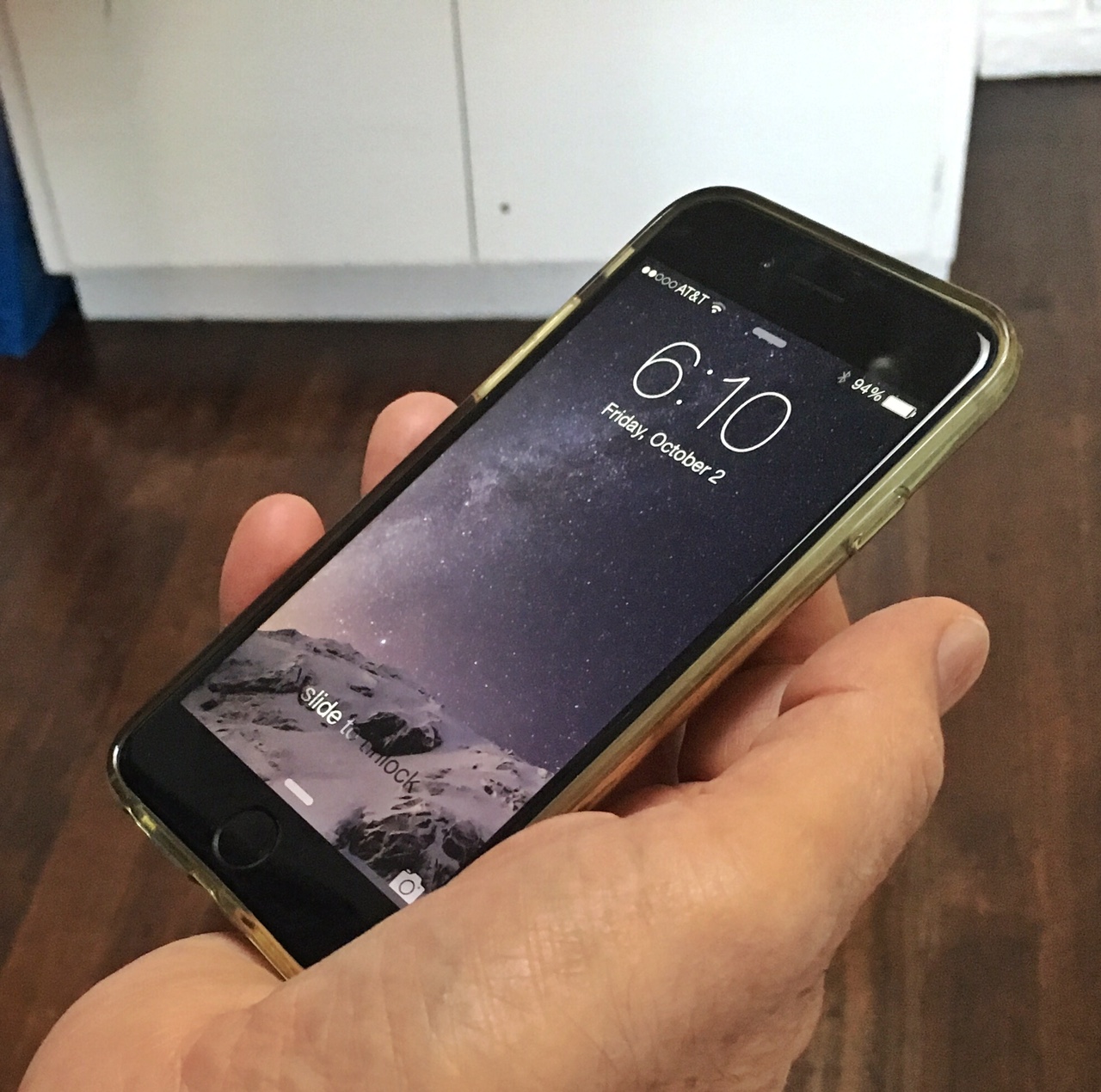
About 20 years ago our daughter came home from school and introduced us to her friend and told us that this friend also sits with her family and eats dinner together. At the time, this was an unusual occurrence for many young people, and this was before smartphones! Now, even those families who may gather together for dinner aren’t fully present for each other because they’re checking their smart phones, worrying about missing out on some new text or Facebook post, Twitter post, or email. FullSizeRender (1)To just be with each other is becoming more and more rare. If someone is sitting across from you and is expressing an emotion that should be paid attention to, you may not notice because your eyes are looking down at a smart phone.

Sherry Turkle is an ethnographer and the director of the M.I.T. Initiative on Technology and Self. She has been speaking out about how addiction to our smartphones reinforces our fear of being in silence and our fear of being bored. There is a constant craving for stimulation provided by media on your smartphone. We forget how to just sit in silence or to speak eye-to-eye with the person across from us.

I will confess that I am not immune from this smartphone trend. I am trying to put the phone away when I’m with people, but I feel the pull of it. I don’t want to miss out. What if someone is writing to me? I know it can wait but I want to respond right away. This is a bad habit! Recently I bought a new phone. I clicked on a link that activated my new one but there was a software glitch. The panic I felt was all out of proportion to the situation. I became obsessed. I had no smartphone. I stopped everything else I was doing and spent hours on the phone with the phone company and then the manufacturer of the phone. I experienced this phone as an extension of my body. It was as though a part of my body was not working and had to be fixed immediately. I knew I was out of control but I kept on pushing through until I had my phone working. I know from my own experience that smartphone attachment and addiction is real and powerful.IMG_3589

What is my solution? I am trying to disconnect once a week on Shabbat. From sundown Friday night until Saturday evening I’m trying to stay disconnected. One way to do this is to put an “away” message on your email and perhaps post “Shabbat Shalom” on Twitter and Facebook. That’s a start. What do you do to temper your smartphone addiction?

A Time for Reflection

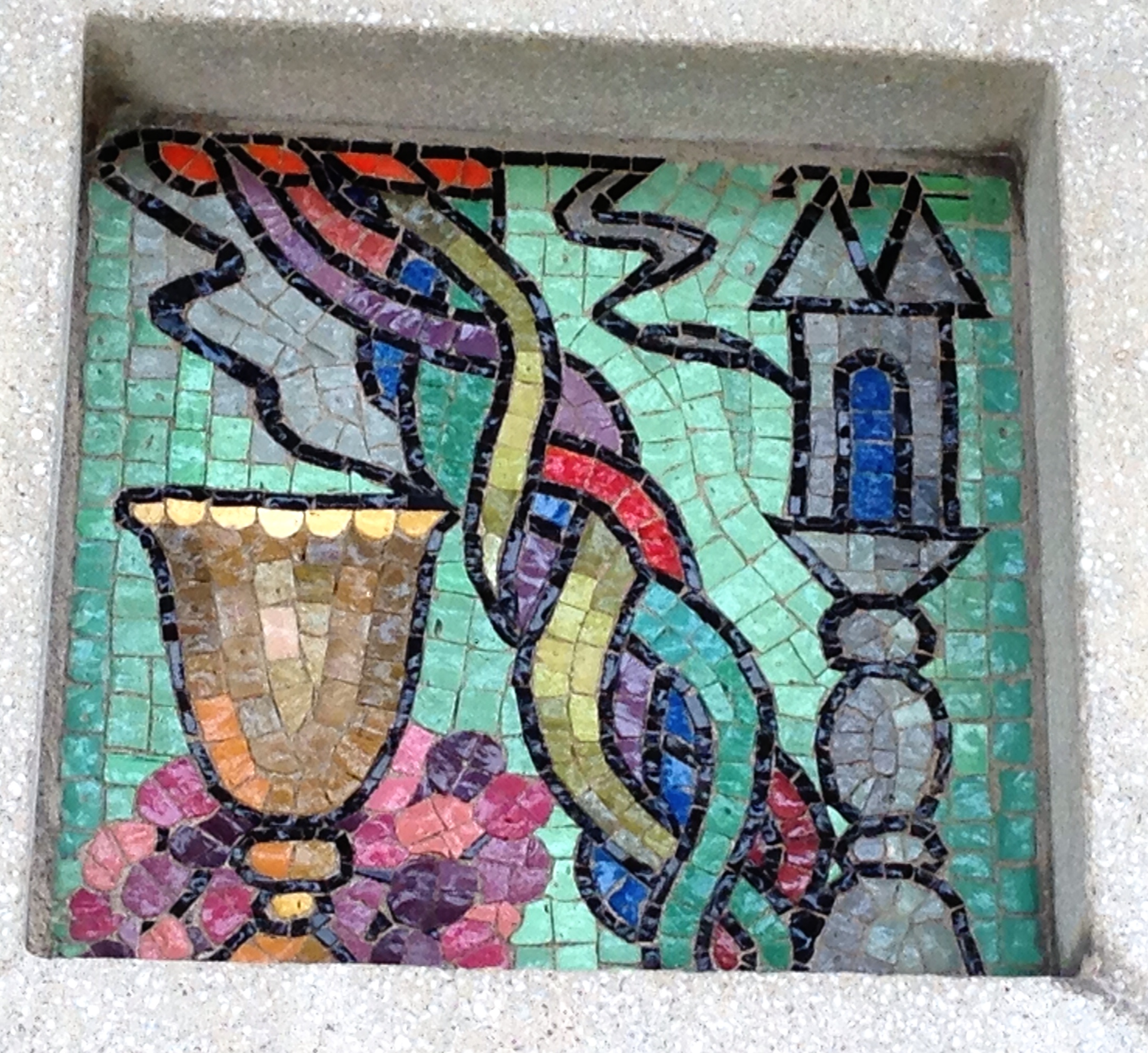
We are entering an important, challenging time in the Jewish calendar, a time to reflect on the past and seek to find a better way forward. This is a time to change our habitual self-centered orientation. We forgive those who wronged us and ask for forgiveness from thoIMG_4864se whom we wronged. We seek to be more understanding and compassionate. There are many websites that help us at this time. We don’t have to rely on a particular rabbi or synagogue for our inspiration. I found a website that I thought was particularly inspiring. It’s called Jewels of Elul, and though I don’t agree with every contributor’s orientation, one of the pieces was particularly inspiring to me. It was posted on the fourth day of Elul (Elul is a month in the Jewish calendar – leading up towards Rosh Hashanah and Yom Kippur – the High Holidays) and I’ve pasted it below:
Elul 4: Mohini ~ Rabba Sara Hurwitz

As we age, our brains are hardwired to reject change. We are conditioned to resist new challenges and remain within our comfort zones. However, growing older should not mean that we must exist within self-imposed boundaries.

In the 1960s, President Eisenhower received the gift of a rare, white tiger named Mohini. For years, Mohini lived in the Washington Zoo and spent her days pacing back and forth in a 12-by-12 foot cage. Finally the zoo decided to build her a larger cage so Mohini could run, climb and explore. But when Mohini arrived at her new home, she didn’t rush out, eagerly adapting to her new habitat. Rather, she marked off a 12-by-12 foot square for herself, and paced there until her death, never enjoying the new opportunities in front of her. Mohini exemplifies the classic conditioning most of us live within. Although she was a magnificent, powerful creature, Mohini was convinced her “place” was just a 12-by-12 foot square. We all have the propensity to behave exactly like Mohini. Based on our conditioning, we create invisible cages for ourselves, limiting our lives within their boundaries.

But we don’t have to succumb to our internal imprisonment. Throughout the High Holidays, we will hear the shofar blast. Historically, the shofar signaled the release of all slaves at the end of the Jubilee year. That sound should make us ask, “What enslaves us? What weighs us down? What baggage do we hold onto?” And then, let it go. The High Holidays present us with a tunnel: an opportunity to break free from our self-imposed cages, to find our route to freedom and to live life with renewed passion. The shofar inspires us to free the Mohini inside and move beyond our boundaries.

Rabba Sara Hurwitz is the Dean of Yeshivat Maharat, the first Orthodox institution to ordain women as spiritual leaders.http://www.yeshivatmaharat.org

An Inspiring Life: Barry Daniel

barry danielRecently I had the privilege of interviewing Barry Daniel for the Middle Way Society Podcast. Was Barry promoting a book? No. Was he promoting a movie or play or particular event? No. Barry simply talked about his life, a life that has been packed with adventure and transformation. He talked about his youth in Manchester, his time with the navy, and the many places he has lived all over the world. I was inspired by the work he has done – offering his emotional support working with the Samaritans in the U.K., his experience working with Mother Teresa helping the dying in Calcutta, and his work with the Green Party to name a few.

Barry Daniel is usually the voice you hear interviewing others for the Middle Way Society Podcast. I invite you to hear about his life in his own words. I’m grateful to have heard his story and I think you will be also.

http://www.middlewaysociety.org/the-mws-podcast-69-barry-daniel-member-profile/

Audio only: http://www.middlewaysociety.org/wp-content/uploads/2015/08/podcast69BarryDaniel.mp3

The Joy of Retirement / Rewirement

For some reason the following Karl Marx statement has stuck in my mind since I first read it as a young adult:

“In communist society, where nobody has one exclusive sphere of activity but each can become accomplished in any branch he wishes, society regulates the general production and thus makes it possible for me to do one thing today and another tomorrow, to hunt in the morning, fish in the afternoon, rear cattle in the evening, criticize after dinner, just as I have a mind, without ever becoming hunter, fisherman, herdsman or critic.” [from German Ideology, 1845]

Though I don’t share his choices of activities, I always thought that an ideal society would make it possible for people to do various activities and not be confined to one, potentially boring, job. His hopes for creating such a society never came to be except in one way. In well-off first world countries, if you have the good fortune of living to retirement age, and you can afford to retire, there is a limitless wealth of activities from which to choose. Here is a sampling of my own choices from the last couple weeks.

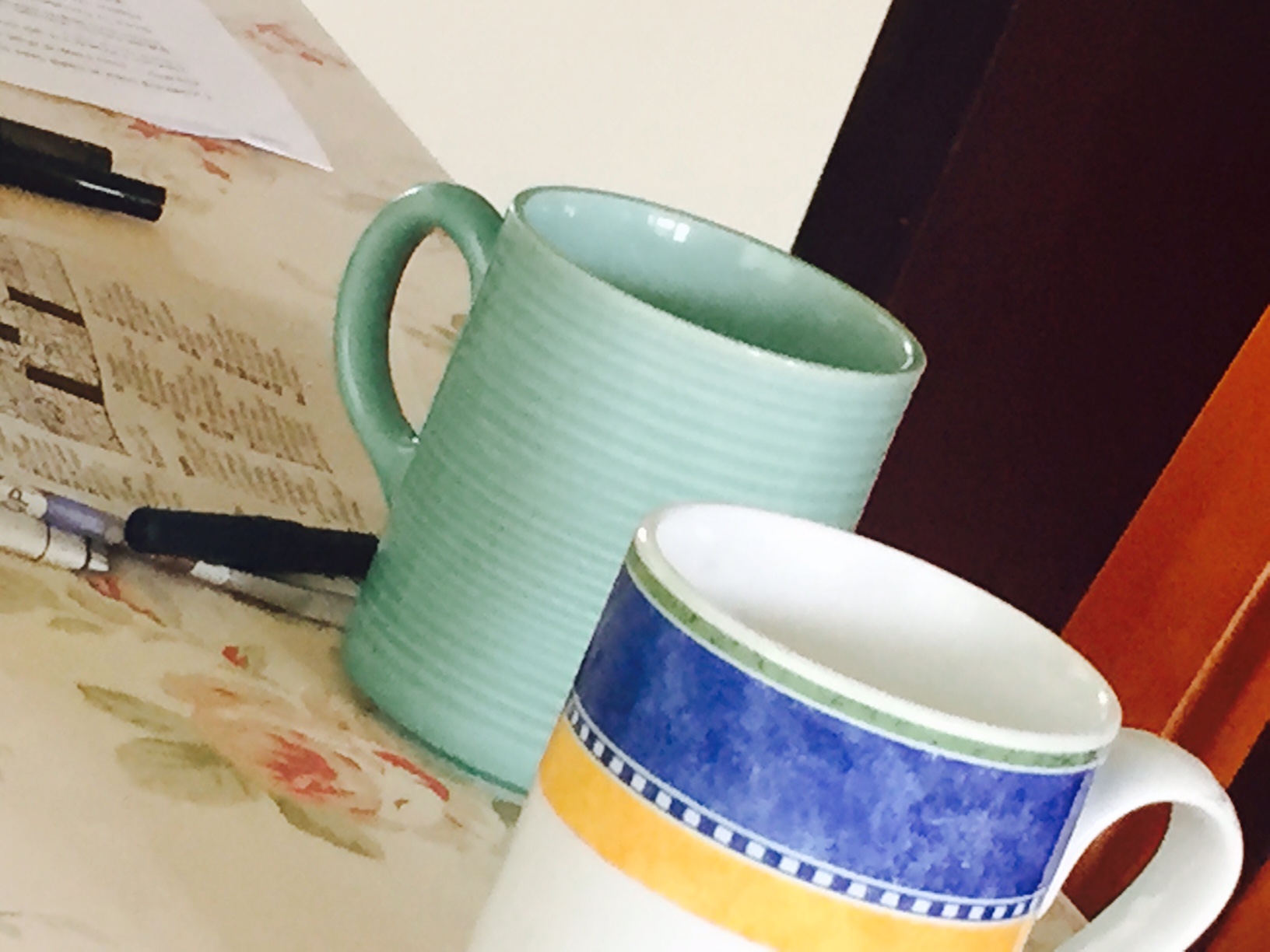
Everyday: I wake up whenever my body tells me to wake up. FullSizeRenderI stretch, brew some coffee, and read the local paper. I walk over to my computer, check my e-mail, and write for 2 hours. I follow up on any letters related to political and professional groups with which I’m affiliated. I also read various journals online, such as Tablet, Tikkun, The Forward, and interesting links that Facebook friends post. What a pleasure! I like to walk an hour a day. Not a day goes by when I’m not grateful that I’m able to do this. When I was wheelchair bound, 13 years ago, I wasn’t sure that walking an hour a day was in my future.

barre assetsTypical Monday includes Barre Assets class, a ballet-based core strengthening and limb stretching exercise class. After that, I go grocery shopping. I take my time because I can! I cook a delicious dinner that will last a few days. Included will be a walk with my husband and perhaps a Netflix movie. In between activities I’ll read from one of the three books I’m reading. Right now I’m reading The Highest Tide by Jim Lynch, Sam Harris’ Waking Up: A Guide to Spirituality Without Religion, and Oliver Sack’s autobiography, On the Move: A Life. What a joy! Another typical Monday includes preparing for Toastmasters which I attend every Tuesday.

Typical Tuesday includes a great Tai Chi class taught by Cecilia Tom at the UCSF Mission Bay fitness center, Bakar Fitness. She runs a demanding but rewarding class. I rush off to Toastmasters across the road. Our Toastmasters community is warm, supportive, diverse, and, wonderful! I look forward to participating and hearing the speeches. If you want to learn to do public speaking in a supportive environment, I highly recommend Toastmasters!

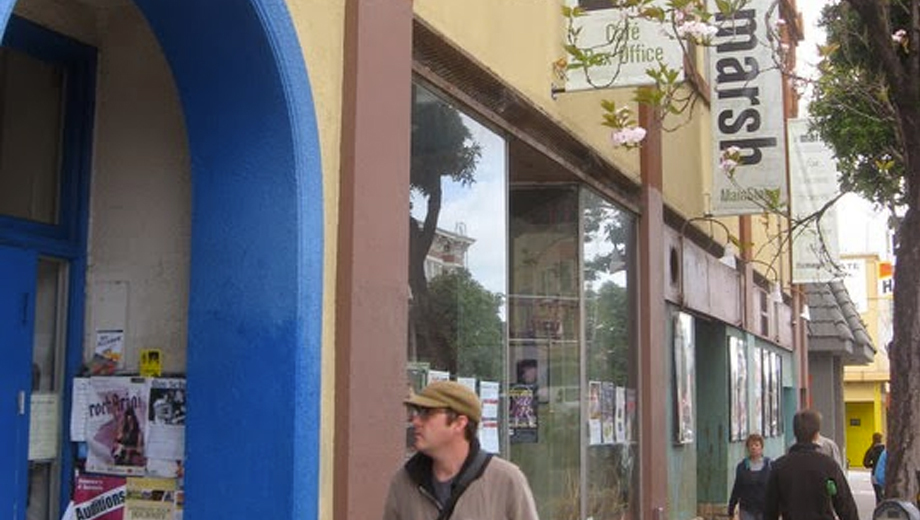
Tuesday activities continue into the evening. Lately, I’ve been taking a storytelling class at The Marsh, a local small theatre The Marshthat specializes in producing monologue/plays written and performed by one person. I’m creating a short piece, receiving coaching from Charlie Varon, a stellar writer, performer, teacher – stretching myself to my limits! Yikes! This is HARD!

The high point of Wednesday is caring for our 10 month old grandson. He’s a joy to be around. Seeing the world through his eyes is a special rewarding experience. We adults become so jaded as we get older, seeing everything in a habitual way. Looking at the world and hearing sounds by closely observing a baby is a great learning experience. You don’t need a grandchild to do this – find a baby and see if you can hang out with him/her!

zumbaThursday is play rewrite day. Also, it’s a day for Zumba (aerobic dance) and Feldenkrais (a form of movement education – especially good for people who have range of motion issues, as I do from a serious injury).

Friday is open; a time for reading, writing, and whatever comes up. I may decide to make it a Shabbat preparation day.

Saturday is Shabbat, a non-productive, restful day for mindfulness.Slide41

Sunday is socialize with friends day.

I’m so happy to do my own creative work and to have time to exercise, babysit, and cook. I realize that I am privileged to do these activities. Not everyone is able to retire. I had the good fortune of working at a place that offers a pension. This is just the beginning of my retirement. It’s been less than a month. I’m still looking for volunteer opportunities. What a joy to be able to do this! I am grateful beyond words!

How to Connect to the 60 Million: One Story

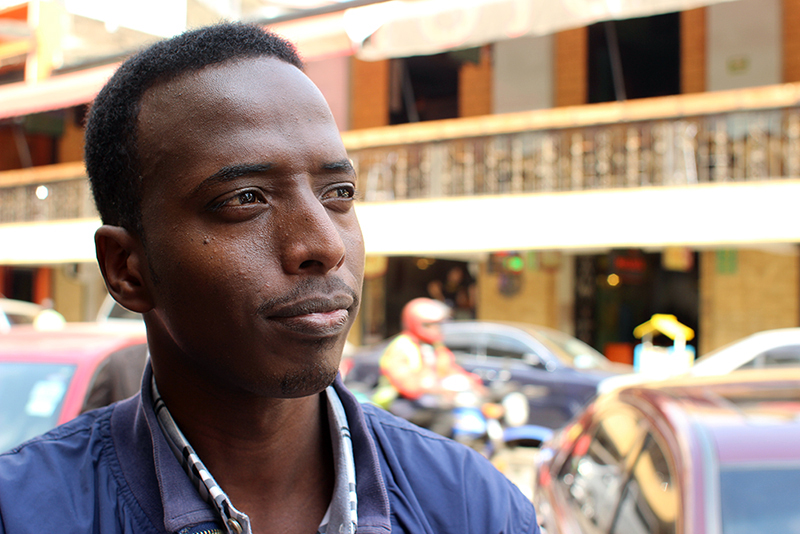
Abdi Nor; This American Life website.

Abdi Nor; This American Life website.

Right now, as you read this blog, there are 60,000,000 people who are displaced because of conflicts in the world. I’ll write that again – 60 million people, the largest number the U.N. has ever recorded! We read about people precariously traveling in overcrowded boats to find refuge, or settling in nearby countries, only to be raided repeatedly by corrupt police. I find it impossible to imagine the stress of these refugees as a mass, but one story I heard today, moved me to tears.

This morning, I listened to one of my favorite public radio programs, This American Life, from WBEZ in Chicago. I heard a story about one such refugee, a Somali living in Kenya, Abdi Nor. The program is called The Golden Ticket. I hope you’ll take the time to listen to his story. You can hear the podcast on your phone or computer. Do take the time. Abdi’s story will take your breath away.

We are introduced to Abdi’s journey with a story about how the United States government offers diversity visas through a lottery program. The idea behind this program is to enable a people with low rates of immigration to the United States to get a United State Permanent Resident Card, i.e., a Green Card.

The first scene we envision is a crowd of people at a cyber café in Kenya. Each person at the computer is hoping that after they click this link to the lottery, they will get the answer they are hoping for – you are qualified to get a visa to the United States!

Our protagonist, Abdi Nor, a Somali refugee joyfully learns that luck is with him. He wins the lottery! He is eligible to apply for a visa to the United States where he has always wanted to settle. His English is so good he barely has an accent. His whole life has been leading up to moving to the U.S. Happy though he is, this is just the beginning of a long story. Abdi’s joy quickly changes to fear and hardship. He has to survive repeated police invasions of his community. When there are attacks by Al-Shabaab, a jihadist terrorist group, the corrupt Kenyan police have an excuse to raid the Somali community; sometimes they take bribes, sometimes they take the refugees away. Abdi and his brother Hassan have to hunker down and hide from the police. Sometimes they go hungry. Sometimes they cannot sleep.

We hold our breath as the days go by before Abdi’s interview at the U.S. Embassy. Will he be able to get his papers before the interview? He cannot be in hiding and get these papers. Will he and Hassan survive the raids?

You’ll have to hear what happens on This American Life through a series of interviews that BBC reporter, Leo Hornak brilliantly records over several months through the computer.

I don’t want to give away the story, but here is one detail that is not a spoiler alert. Hassan, Abdi’s brother is asked if he’s jealous that Abdi has won this visa. Hassan is genuinely and completely happy for his brother. He is not at all jealous. He shows a true generosity of spirit. His shared joy was inspiring!

Now, please go listen to the program. We are all on this planet together and, painful though it is, we need to know what life is like for everyone. Please listen to Abdi’s story.

Shavuot – Ruth – Welcome!

shavuotWe are approaching the holiday of Shavuot, an ancient holiday that used to be a harvest festival and has morphed into a holiday that celebrates the giving of the Torah at Sinai. This holiday is a good example of how Judaism has evolved over time. There is no Temple to celebrate the original pilgrimage festival that occurred at the time of Shavuot, but the rabbis created a new holiday that encouraged the community to celebrate the giving of the Torah. The Torah is a central text in rabbinic Judaism and it makes sense that a holiday would have been created to celebrate that text. Many people stay up all night to study Torah and other Jewish texts on this holiday, and the story that is associated with Shavuot is the story of Ruth.

I’d like to talk a bit about the story of Ruth, but first I’d like to share my approach to the stories in the Bible. I assume these stories from ancient times were written by men. We cannot know what their experience was. We have very limited knowledge about that, but, at the very least, I do not believe that the texts were divinely written or inspired. For me, and many other humanistic Jews, to treat the text as sacred severely limits our possible interpretations.

The Bible is not a book. The Bible is a collection of many stories, and these stories are not told from one perspective. In fact, two of the most opposite stories in the Bible are the story of Ruth and the story of the return of Ezra to Judah after the exile in Babylonia. Ezra, with a great degree of anger, asks the people (am ha’aretz – people of the land) who have stayed in Judah, to divorce their foreign wives. Ezra represents a parochial, exclusive, elite point of view. The Book of Ruth, which sounds more like a fairy tale than an elite proclamation, is about a Moabite widow (from Ezra’s point of view a foreign wife) who follows her Judean mother-in-law, Naomi, back to Judah. Everyone has heard the famous line from Ruth: ‘Entreat me not to leave thee, and to return from following after thee; for whither thou goest, I will go; and where thou lodgest, I will lodge; thy people shall be my people, and thy God my God;. . .
(Jewish Publication Society Translation)

Ruth simply joins the Jewish people. Later, rabbis created a story to say that Ruth converted to Judaism, but whoever wrote this story had a very different idea about how people joined the community. The story of Ruth is written from a completely different point of view than the story of Ezra. Studying Jewish texts, like Ruth, could be a good starting point for us to open the boundaries and welcome all people into our communities.

Self / No Self

Below is my first Toastmaster speech. The assignment was called “The Ice-Breaker” and the task was to introduce myself to the group.

Hello everyone. Today I’ve been asked to introduce myself. Sounds easy, yes? But I ask:

Is there an abiding self who can be introduced?

Am I the nice Jewish girl from Chicago, never questioning the many rules of an orthodox religious practice?

Am I the radical anti-war activist attending six meetings a day, building People’s Park in Berkeley, demanding Third World Studies, and marching in the streets?

Am I the feminist working for women’s rights when the mainstream media and even public television found the movement to be amusing, even laughable?

Am I the artist, disillusioned with political activism, trying to create a new reality through art?

Am I the wife and mother, shaping a more evolved next generation?

Am I a research writer and graphic designer, contributing to public health? And learning to mediate at the university to help people to better communicate with one another?

Am I the humanist rabbi trying to foster interfaith dialogue with the goal of increasing understanding between people of all beliefs and trying to help alleviate suffering?

Am I the doting grandmother (bubbe in Yiddish) whose heart aches with love for her three grandchildren?

To be honest with you, I am torn between two ways of looking at this idea of the self. The first way is one that is inspired by Dogen Zenji, the founder of Soto Zen. He said (this is a very loose rendition):

“To study the Way is to study the self, to study the self is to forget the self, to forget the self is to be enlightened by all things.”

But then, there is the Chassidic tale about Rabbi Zusya:

Rabbi Zusya, a wise and pious man was near the end of his life and he was weeping. His students gathered around and asked him, “Rabbi Zusya, why are you crying? You have led an exemplary life.” Rabbi Zusya answered them. “When I die and go to heaven, the angels will not ask me, “Why were you not Moses, leading the people out of Egypt?” They will not ask me, “Why were you not Solomon, offering wisdom to the people?” They will ask me, “Zusya, why were you not Zusya?”

No Self / Authentic Self

So, who am I – this person standing here before you all? Is there an abiding self who can be introduced? Would we want there to be such a self? If so, is there a thread that holds these selves together into one self?

Some people say that we are the stories we tell.

In that case, I am the forgotten self, the authentic self, the nice Jewish girl, activist, feminist, artist, researcher, designer, mediator, mother, rabbi, bubbe, toastmaster attendee, and I’m very happy to meet you.

Moving from fear to joy

Have you seen the “horse learning about water” video? Some say this video has gone viral. I try to understand why. Here’s the link, if you would like to see it for yourself:

https://www.youtube.com/watch?v=yAQLkI3EpMk

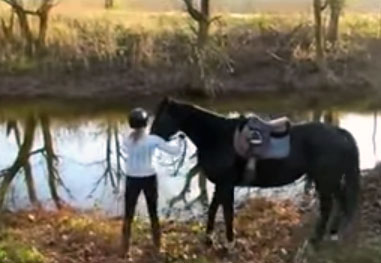
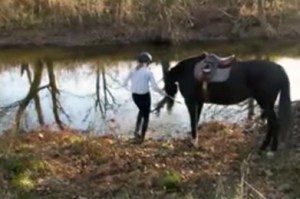
I’ve been pondering why the video has so much power. For those of you who may not have access to the video, I’ll briefly describe it. We see a pre-teen girl sitting on a horse, leading it toward the bank of a body of still water, likely a pond. The horse is clearly afraid and backs up. 1HORSE APPROACHING WATER The girl leads the horse again – again the horse backs away. In the next scene we see the girl, now off the horse, leading the horse by the reins toward the water. 2HORSE LEADING ON FOOTThe horse backs away again. But the girl is patient and persistent. She puts her foot in the water, and circles of water radiate from where her foot entered. She does this repeatedly and the horse looks at the rings of water and appears interested and puts its hoof in the water to3HORSE GIRL SHOWING WATER CIRCLESo. Slowly, the horse appears to be more and more comfortable in the water. The girl leads it in further. The horse splashes the water with glee. 4HORSE SPLASHThe girl laughs and laughs and the horse, its comfort level quite high at this point, keeps splashing and splashing. The joy of the splashing is punctuated by the girl’s infectious laughter. Pure joy is expressed by the horse and by the girl. If we empathize with these two beings we experience deep fear, patience, curiosity, and joy all in a period of 2 minutes and 19 seconds!

I wonder why I am so taken with this video. I begin by googling the symbolism of horses, since I know that if I had seen a mouse, or even a small child get acclimated to this water I don’t think I would have responded as strongly as I did. My search is unsuccessful – I mainly find posts about spirit animals and the meaning of horses in dreams. These posts do not resonate for me at all. I’m left to my own imagination – so here goes:

Horses are powerful creatures. The level of fear that I experience if I identify with this powerful creature is high. I am that horse and I feel the strong discomfort of discovering something new that scares me to the core of my being. Something guides me, though, to face up to this fear. I see someone else modeling comfort with water, and I realize that with this support and guidance, maybe I can try to face my fear. Not only is the fear overcome, but also the experience that follows is indescribably joyful.

I find myself wondering about what I’m afraid of. What is standing in the way of my joy? My first thought is that I am afraid to express my feelings to family and friends. I grew up in a fairly non-expressive family, the reins held back because of fear of total loss of control and mental illness, a real and persistent problem in my mother’s family. As I write this, the tears come, so I think this is real. The water in the video perhaps symbolizes life and the free and full expression of emotion. This is what I have to learn to splash in and not back away from. Luckily, I have the good fortune of having a persistent guide, who, though I resist again and again, keeps grabbing my reins and pulling me toward the water. Perhaps this is why the viral horse video has so much appeal for me. How about you? What is your fear? What stands in the way of your joy?

From black and white to grey

My husband and I like to relax in the late evening by watching a movie or a television series. Lately we’ve been watching Girls. Have you seen this series? It’s about young twenty-somethings in Brooklyn and their angst over supporting themselves, expressing themselves, their relationships, sex, and life issues in general. We watched a couple Season 2 episodes (and if you comment on this post, please don’t reveal anything . . .we’re taking this slowly), and I woke up thinking about these characters and how self involved they are. As a boomer I ask myself why I would

LenaDunham be interested in such self-involved people. I tend to be judgmental and I don’t like that about myself, but why would I be interested in this program? None of the characters do anything for anyone else. The closest thing to service is that one character is a high-end hostess. Of course, the main character is a writer and perhaps what she is writing will have relevance to others – though perhaps not. At one point she has a writing assignment to get out of her comfort zone, to take cocaine and go wild and write about it. I’m not sure how comfortable I am with that scenario, although, perhaps the idiocy that transpires in the episode is a life lesson we might take from the story. Or maybe she is doing art for art’s sake. As I think that thought I have an “aha” moment! Over the past week I’ve been photographing my old paintings that I’ve had stored in the basement for as long as 30 years. I no longer have room to store these paintings and will be releasing them to family, friends, and non-profit institutions that will display them. This morning I thought about why I had stopped being a painter and chose, instead, to become a humanist Jewish leader and then a rabbi. Here is a short version of the story.

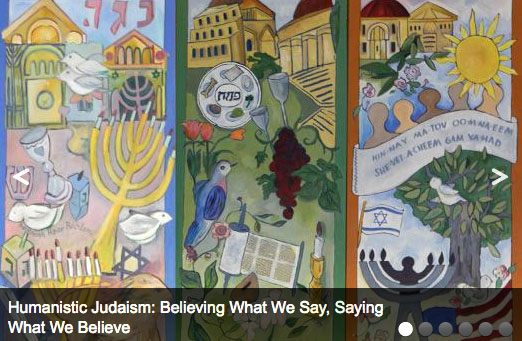
I grew up conservadox, attending a Conservative congregation, but with my mother keeping the law in a more orthodox way than most of the congregants. However, as a teenager I left the orthodox path after witnessing hypocrisy within my community; my civil rights activist rabbi was the first to abdicate to “blockbusting,” moving out of our community at the first sign of an African-American family moving in. I was quite appalled, as only the very young can be appalled; I saw everything in black and white, and had zero tolerance for hypocrisy. It was easy to be disillusioned as an adolescent.

woc_vietnam-antiwar-march-1968

photo from Getty archives

When I went to college and became active in the anti-Vietnam War movement, I thought about World War II, and believed that as a Jew it was my obligation to take a stand, and not let a people be destroyed the way my people was destroyed in Europe. My activism was first curbed by the dominant-male personalities of the leadership within the student left. I joined the women’s liberation movement, assuming that women would be more respectful than men. Of course I was wrong. I discovered that to simply state what you believe is right, and to fight to create change without looking within oneself, can be counterproductive. One doesn’t change other people’s minds unless one totally respects the other person, whether or not they agree with you. To nurture the ability to hear another person requires a great deal of effort and skill. At the time of my disillusionment with political activism I wasn’t ready for the task, and I turned to create my own world of paintings. This didn’t require any effort on my part to change anyone but myself. I painted some beautiful paintings, showed these in galleries, received a fair amount of acknowledgment for my efforts, but felt dissatisfied—I think, at least in part, because I was raised as a Jew with a sense of obligation to a community (and not just a community of art lovers).

EXPRESSIVE2

If you’d like to see more of these you will find them here: jubusuart.wordpress.com


So, if I wasn’t going to change the world through political activism or art what did I need to do? At the same time that I asked myself this question, my daughter completed a multicultural curriculum at her public school. She became interested in her own cultural roots. It was time to look for a Jewish community for my children! I searched and found a local chapter of the Society for Humanistic Judaism and we all went to Yom Kippur services. This was the beginning of a long involvement with humanistic Judaism. This involvement led me back home to my Jewish roots. Soon after joining Kol Hadash, I was asked to go for training to become their leader. I completed this training in 2 years and led the group for 5 years.

Check out shj.org to learn more about Humanistic Judaism

Check out shj.org to learn more about Humanistic Judaism

Acting as a spiritual leader for Kol Hadash was a challenging and rewarding experience. I found, however, that the more I learned about Judaism, the more I didn’t know. After stepping down from my leadership role in Kol Hadash, I embarked on a journey of Jewish learning that brings me to today. My Jewish learning led to my ordination as a rabbi in November 2014 and will be a permanent part of my life.

Now, I, the rabbi, take the painter’s, my, paintings and photograph them. I lift each heavy painting out the side door of my house, haul it onto a bench, lean it against the house, and take a photograph. I go back and forth more than 30 times over a week. Sometimes I gasp at the beauty of the piece and this brings me into a spiritual zone that I was in when I produced the painting. Perhaps my criticism of Girls is really a suppression of the artist in me. We humans are complex. We can be personally creative and socially responsible. I hope that by my age I can learn to think in grey and not just black and white!

Simple pleasures

I’m trying to take my Shabbat consciousness and bring it to my everyday life at least some of the time. By Shabbat consciousness I mean being aware of what is happening in the moment and attempting to not think about plans or goals – cultivating a sense of satisfaction.

This year begins and I’m most struck by how satisfied I am by simple activities.

Example I: Today there is no work. I wake up, wash, and put in my contact lenses, then stroll into the kitchen, turn, and take a large onion out of the pantry. I peel the onion and slowly slice it into thin slices. photo(1)My eyes tear a little as I separate the thin rings of onion. I warm the iron skillet and after a few moments pour in a fair amount of grape-seed oil until it looks hot but is not yet smoking. I scrape the onions into the skillet and hear the loud sizzle as the thin rings hit the pan. I stir them with a wooden spoon and lower the heat. The aroma is wonderful. I’ll let the onions cook for 20 minutes. After they caramelize they are sweet, no longer sharp and tear provoking. I think about how amazing it is that a simple onion can go from pungent to sweet in 20 minutes! How lovely! They will be the main filler for the omelet I prepare for Al and me. Delicious!

Example II: Lately I’ve been cutting through the weeds in our garden. The blackberries and anise stalks have taken over. We have a large backyard area because our lot is a standard size lot in San Francisco and our house is quite small. There is an enormous amount of space for blackberries, anise, vines, all kinds of native-growing wild foliage to thrive – with or without a drought. The weeds have grown so high over the years. Between my day job and taking classes I didn’t think there was time for working out back so the weeds flourished.

photo-1Sometimes I liked the jungle-like appearance back there but now I’d like to help create a space where my grandchildren will be able to play. Every day I go out back and weed for 1 ½ to 2 hours. I cut through the brush, pile the debris in the front of the yard and then cut the branches to fit into huge garden waste bags. I hear the birds and smell the earth and breathe the fresh air. All I have to do is step outside my own house and I’m in nature. What a pleasure it is to simply cut weeds, hear birds, and smell the earth.

Example III: My good friend calls me in the morning. “Do you want to walk to the top of Bernal Hill?” she asks. Yes, surely I do. I eat breakfast, get dressed and we start out on our walk, catching up on what is new for each of us. We see a woman two blocks away and my friend asks her if she took art classes with her. The woman did not, though she is an artist and attends art meet-ups that my friend may want to attend. We talk with her for quite a while and we’re all quite happy to stand outside talking about our lives. My friend and I walk further, continuing our conversation about things we’re going to do in the New Year, about children, grandchildren, life, how lovely the day is. We walk for 1 1/2 hours and make it to the top of Bernal Hill. The view is amazing and the walk back is lovely also. We both know how lucky we are to be able to walk 9 miles up and down hills. We don’t take this for granted.

photo (22)Sweet onions, birds, weeds, earth, friends, conversations, sunny days, walking up and down hills – I am grateful for these simple pleasures.