
 I am as distraught as I’m sure you are about the times in which we find ourselves. There are violent white supremacists marching in the streets; violent antifa activists who think they can take care of the situation; and most of us, who show up to say that we will act in a peaceful manner and make ourselves heard. We will stand against Islamaphobia, racism, and anti-Semitism. But is standing up and being seen enough? I think the answer to that question is no. Here is why.
We who are liberal are blind to those who voted for Trump. That is why Trump won the election. When you live in a bubble you do not have a whole lot to say about what will happen in a national election. I know – Hillary actually won the popular vote – but 63,000,000 people voted for Trump. Why is that? We need to know about the suffering of those who were so desperate for change that they voted for Trump.
Young conservatives become radicalized when they are treated as less than human. Groups like the Patriot Prayer folks who were about to rally in San Francisco, are paranoid and feel a persecution complex. When you beat them up; when you do not recognize that they are human beings, they become more and more radicalized and may eventually become more extreme than they already are.
I was impressed with how individuals who were likely from the Patriot Prayer group walked through the crowd at the Civic C enter in San Francisco and were not harassed. They were just there – no issue at all. The situation in Berkeley was completely different. The antifa people, who, apparently, love a good fight, may have helped radicalize people to a more extreme position than they originally held.
Having peace requires being peace, as we will always remember from the Civil Rights Movement.
The Southern Poverty Law Center offers a list of 10 ways to counter hate. Below is a summary:
- Act
- Join forces
- Support the victims
- Speak up
- Educate yourself
- Create an alternative – do not attend a hate rally. Find another outlet for anger and frustration and for people’s desire to do something. Hold a unity rally or parade to draw attention away from hate.
- Pressure leaders
- Stay engaged
- Teach acceptance
- Dig deeper. Look inside yourself for biases and stereotypes. Commit to disrupting hate and intolerance at home, at school, in the workplace, and in faith communities.
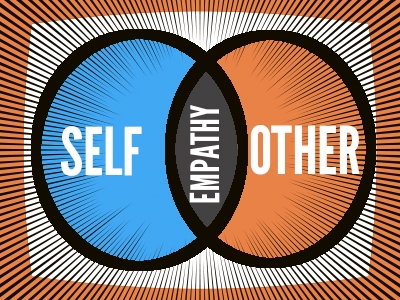
I would add that as we educate ourselves and dig deeper, that we look at our own demonization of those who disagree with us, and see if we are projecting something undeserved on those who may not be as extreme as the most radical right-wing Nazi 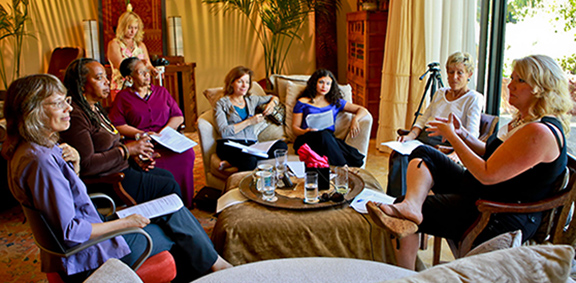 white supremacists. There are organizations like livingroomconversations.org, and Center for Building a Culture of Empathy. We need to talk to each other before it’s too late and we end up being divided beyond repair.
 I haven’t written for quite a while. I’ve indulged my obsessive orientation towards whatever project to which I’ve committed myself. The latest project was to create an in-law apartment for my husband and myself. The project involved hiring a contractor, discontinuing our relationship with that contractor due to cost concerns, hiring another contractor, being involved with every detail of the design and building of the place – picking out woodwork, cabinets, sinks, faucets, tile, flooring, paint; everything. I spent countless hours shopping on the internet, shopping for the basic items such as pulls for cabinets and all the other basic items that are needed to create a kitchen and bathroom. Most of the furniture we bought was used, but to find nice used furniture also involved more obsessing; hours combing through listings on the internet; hours going from thrift shop to thrift shop. The process took well over 2 years. We have finally moved in and I’m reeling with exhaustion, excitement, joy, sense of accomplishment, and a strong sense that the difficulties involved were surely a First World problem. I go back and forth between thinking that it surely was worth the time and cost to create a nice place for my husband and me to live and to provide space upstairs for our daughter, son-in-law, and grandson. The conflict that creeps up on me, though, is the sense that with the world as it is, how can I spend this much time trying to make us comfortable when everything around me is falling apart, when refugees are dying as they try to reach a safe haven; where health care access is being decimated in the U.S.; where populist movements in the west are destroying what I used to think of as a progressive globalism. You get the picture. Is it okay to meditate, garden, create a warm space for yourself, your extended family, and your friends? Is it okay to live a comfortable, privileged life when the whole world is falling apart around you?
 This morning I enjoyed reading an article that my husband sent me about how important music is to those who are dying. He sent it to me because I am in the Threshold Choir, a group that sends several people at a time to sing at a person’s bedside when they are near the end of their life. Reading the article triggered a memory that I had suppressed. In 2012, I accompanied my mother home in an ambulance as she was released from the ICU to go home to die. She sang with delight that she was going to be able to die at home. She was transferred to a hospital bed in her living room and had an attendant for that first night home. I stayed in her bedroom. In the middle of the night I heard the attendant and my mother arguing with each other. The attendant kept turning off the music that my mother was playing and telling my mother to go to sleep. I got up – turned the music back on, and told the attendant that it was my mother’s choice to listen to the music and it was going to stay on! Music comforted my mother more than anything else. I was angry at the attendant for turning it off.
 Lighting these candles is both bitter and sweet. I appreciate having this ritual. I remember my brother, my mother, and my father. My husband remembers his parents and his brother. Memories of them burn brightly.

 grateful for ordinary plumbing.
 “Do you know where the gym is? I’m trying to get to the gym.” I told him where the gym was and kept walking, including walking through the building where the gym was. I could hear the crowd gathered for a basketball game and was reassured that I had given him good directions. I made it to Redwood City, though I almost missed my stop because I was so immersed in Merton’s book. I sat in the meditation hall for 40 minutes and began to swell up as I always seem to do when I sit to meditate. My fingers get painfully swollen and I think that I’m doing an activity that is not healthy for me. I went to lunch and began to go back for the rest of the day’s activities – sitting meditation alternating with walking meditation – and it occurred to me that I would rather read and spend time with my husband than sit and swell in a meditation hall. I called Al, my husband, and made plans, walked to the train, got off at the BART station closest to my house, and, again, walked through City College. I was listening to a beautiful rendition of Salve Regina, sung by Benedictine monks, thinking that it would be great to use the beautiful melody and write alternative words, since the meaning of the Latin words doesn’t resonate for me in the way they are intended. We humanistic Jews do this with Jewish prayers as well. Why not this song? As I listened someone was trying to get my attention. She was driving a truck and was asking me where the gym was. I told her; this time I was quite sure about where it was.
 I am addicted to doing. I allow myself to just “be” once a week – on Saturday, on Shabbat, and this links me to a chain of Jewish practice that goes far back in history. I like this “time outside of time” as Abraham Joshua Heschel described Shabbat. However, I’m beginning to think that this one day is not enough. I seem to be addicted to constant activity. I think I may have learned this behavior from my family. We are not worthy unless we are being productive.
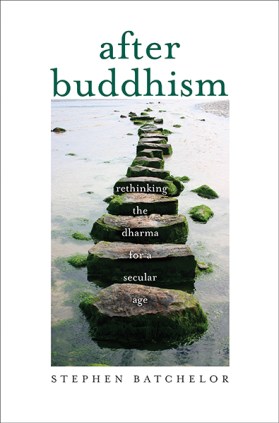 Batchelor tries to rescue the original teachings of Gotama, Buddha. Because Batchelor has been immersed in the world of Buddhism since he was a young man, and because he has been inspired by Buddhist practice as he understands it, he feels rooted in that tradition. To quote the Buddha helps embed and locate him within the unfolding of this tradition. At the same time, he doesn’t look at tradition as a fixed thing to be followed blindly. He sees tradition as a place to root oneself in order to be able to flourish more fully. Batchelor talks about seeing a graffiti on the Berlin wall when it fell that said: “Culture without history is like a tree without roots.” He said that to be self-conscious of your embeddedness in your tradition is nourishing, is emotionally and spiritually grounding and affirming, and gives you confidence and courage.
 Rabbi Susan Averbach